A Closer Look at Building a China Procurement Workflow
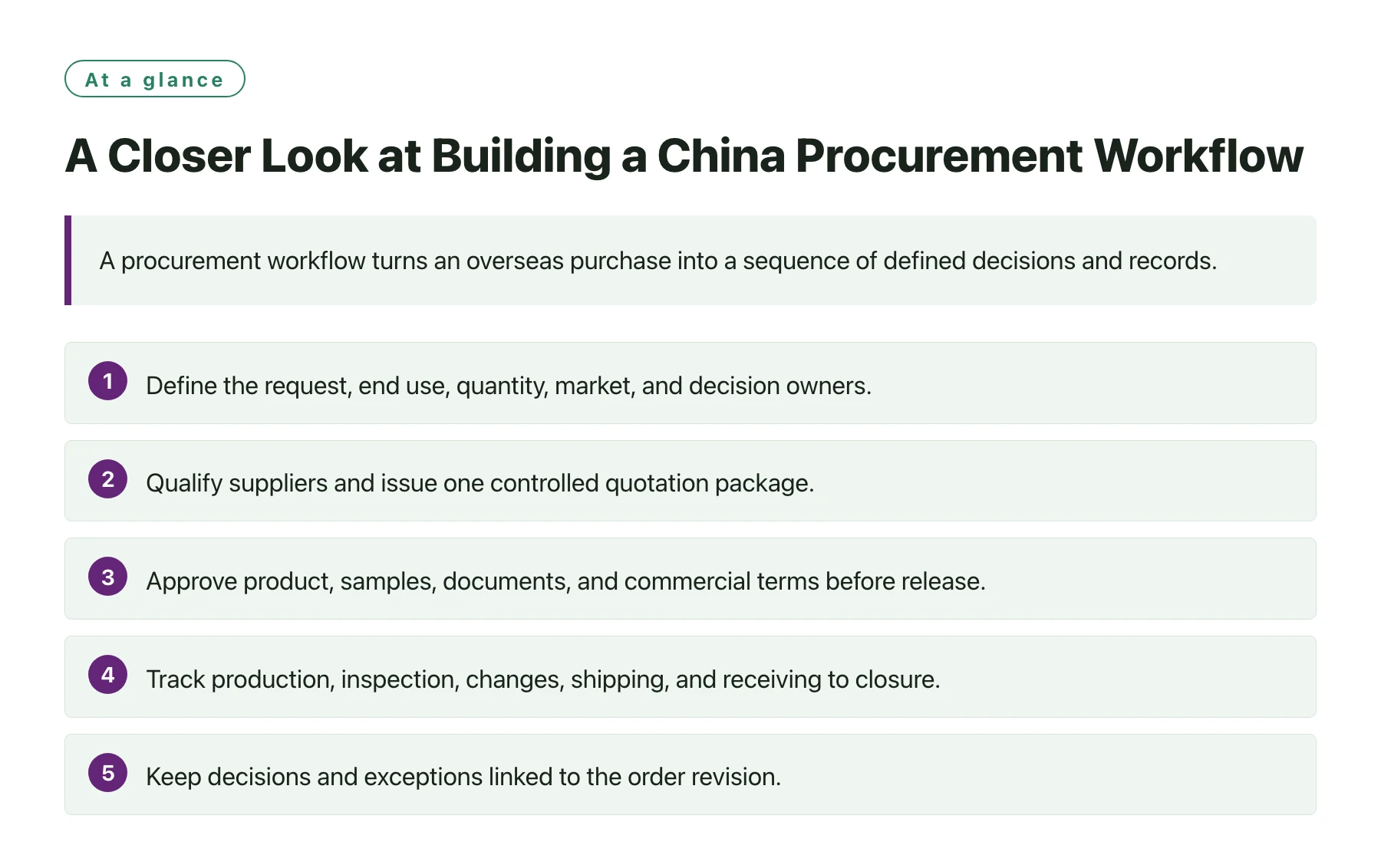
A procurement workflow turns an overseas purchase into a sequence of defined decisions and records. For China sourcing, make responsibilities, specifications, approvals, production milestones, communication, and delivery assumptions visible across time zones and organizations. The workflow should preserve the buyer’s authority while helping suppliers know what evidence is due and when.
Key takeaways
- Define the request, end use, quantity, market, and decision owners.
- Qualify suppliers and issue one controlled quotation package.
- Approve product, samples, documents, and commercial terms before release.
- Track production, inspection, changes, shipping, and receiving to closure.
- Keep decisions and exceptions linked to the order revision.
A partner evaluation should match the buyer’s actual workload, risk, and need for local coordination.
1. Intake and clarify the requirement
Start with product, intended use, drawings, target quantity, destination, deadline, packaging, variants, market requirements, and service expectations. Mark unknowns and assign technical owners. Avoid asking suppliers to price a moving target without tracking assumptions.
Record what is mandatory, what is a preference, and what needs buyer or engineering approval. Create a brief with version, issue date, and contact details so every participant can refer to the same starting point.
2. Decide sourcing route and supplier criteria
Choose whether to work with a factory, trading company, authorized distributor, or coordinated network based on product, capability, volume, risk, and buyer resources. Document who makes the product and which activities are subcontracted.
Set qualification criteria such as process capability, capacity, site, export experience, quality evidence, communication, and continuity. Select verification proportional to risk. Do not treat a catalog or company profile as proof that the quoted entity controls production.
3. Issue one controlled RFQ
Send the same specification, drawings, quantity, forecast, packaging, destination, delivery basis, and evidence request to each candidate. Ask for model-specific pricing, lead time, minimum order, samples, tooling, tests, warranty, spare parts, and exclusions.
Track questions and answers in a clarification log. Record each offer revision, currency, validity period, and proposed substitution. Normalize units and commercial assumptions before comparing totals.
Set a quotation deadline and identify a person who can answer technical questions. Tell suppliers how to flag exceptions and whether a sample is required with the initial bid. This reduces late surprises and helps the buyer compare complete offers instead of incomplete headline figures.
4. Complete technical and compliance review
Review sample identity, drawings, materials, labels, manuals, test reports, and destination-market evidence. Assign qualified owners to product safety, regulatory, engineering, and design decisions. A supplier quality-system certificate can inform process assessment but is not product approval.
ISO 9001:2026 specifies quality management system requirements; use relevant evidence to understand supplier controls while separately confirming that this product and order meet the buyer’s requirements. [1]
5. Approve commercial and delivery conditions
Confirm price, quantity, payment milestones, tooling ownership, production lead time, pack details, inspection cost, and remedies. Write the selected delivery rule with named place and edition. ICC Incoterms® rules clarify specified buyer and seller tasks, costs, and risks; the full contract must still define product, payment, and remedies. [2]
Reconcile the approved quotation with the purchase order before deposit or production release. List conditions and open documents with an owner, deadline, and hold point.
6. Launch production under controlled inputs
Confirm factory, bill of materials, approved suppliers, work instructions, labels, packaging, schedule, sample reference, and inspection criteria. Hold a readiness review for critical orders. Communicate the revision to all relevant factory and buyer contacts.
Set milestones for materials, first-off production, in-process checks, final inspection, documentation, packing, and shipment release. Track plan against actual with evidence rather than relying only on a general status statement.
The supplier should acknowledge the released revision and confirm that affected workers and subcontractors received it. Keep the acknowledgement with the readiness record and verify that the production copy matches the buyer-approved file.
7. Control inspection, issues, and changes
Define lot, sampling, tests, defect classes, acceptance rules, report format, and authority to approve a deviation. Route findings through containment, corrective action, owner, due date, and verification. Keep shipment on hold if a critical criterion remains unresolved.
Require notice of changes to site, material, process, components, quantity, or delivery. Reassess samples, tests, cost, and timing when changes matter. Maintain one change log linked to order revision.
8. Coordinate shipping and receipt
Confirm packing list, invoice, labels, certificates, origin paperwork, shipping mode, broker, insurance, and delivery appointment. Check data consistency across documents before dispatch. Assign responsibility for each document and logistics task.
At receiving, verify product identity, quantity, package condition, lot traceability, and open test or document requirements. Record damage, shortage, and claims within contract timelines. Close corrective actions and payments against evidence.
Prepare a document checklist that maps every required file to an owner, due date, and order milestone. Check spelling of product identifiers and quantities across records before submitting shipping documents to the broker.
9. Keep a traceable project record
Retain RFQ, quotes, clarifications, qualification, approvals, orders, reports, changes, shipping records, invoices, and receiving outcomes under consistent identifiers. Record who accepted each technical, commercial, compliance, and shipment decision.
Buyers reviewing Learn more can compare a proposed sourcing workflow against these decision points, confirm the support scope and fee, and retain control of approvals and market obligations.
Sources
Frequently asked questions
What is the first step in a procurement workflow?
Define product, intended use, destination, quantity, deadline, technical requirements, and decision owners before requesting quotes.
When should production begin?
After the controlled specification, commercial terms, required approvals, sample basis, materials, and readiness conditions are documented.
Do delivery terms replace a full contract?
No. They address specified delivery tasks, costs, and risks; product scope, payment, quality, and remedies need separate agreement.
How can a buyer keep the workflow auditable?
Link each approval, report, change, and shipment record to a dated order revision and named decision owner.